


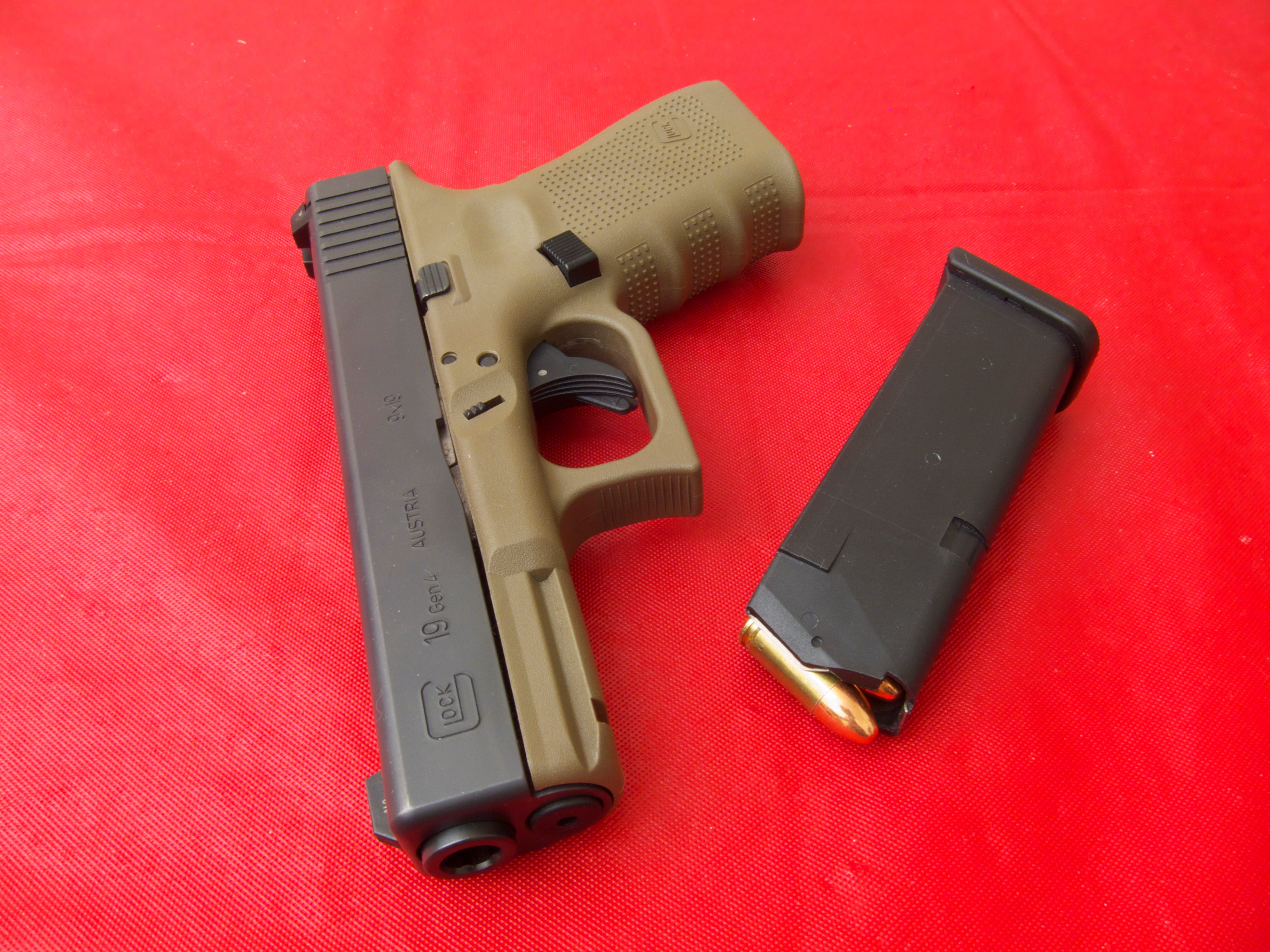
On October 22, Delaware's attorney general, Kathleen Jennings, sued Glock. The complaint, filed in the Court of Chancery against Glock, Inc. and its Austrian parent, says the company's pistols can be turned into machine guns with a cheap illegal device, a "Glock switch," and that Glock should have redesigned them. The state wants a court order stopping civilian sales of those pistols in Delaware, plus damages. Sales to law enforcement would continue.
It is the latest case, not the first. And it is only one track of a two-track campaign.
Two tracks, one target
Track one is the lawsuits. Cities and attorneys general have been filing them under new state "industry accountability" laws, usually as public-nuisance claims, and asking courts to force a redesign or to shut off civilian sales. Chicago filed in March 2024. The attorneys general of New Jersey and Minnesota filed in December 2024. Baltimore and Maryland filed in February 2025. Seattle filed in September 2025, naming Glock and three local dealers. Philadelphia and its district attorney filed in March 2026. Delaware followed in October.
Track two is a sales ban, aimed at what the bills call "convertible pistols." California went first. Assembly Bill 1127, written and sponsored by Everytown, was signed on October 10, 2025. Since July 1, 2026, California dealers have been barred from selling those pistols. Owners keep the ones they already have, and private sales are exempt. Maryland's sales ban is set for January 1, 2027. New York's dealer ban is set for May 31, 2027. Connecticut passed a similar law that was supposed to take effect on October 1, 2026. A federal judge issued a preliminary injunction, so that sales ban is not in force while the case proceeds. That order is not a final decision on the law. It is a sign the Second Amendment fight is already underway.
A "Glock switch," also called an auto sear, is a small device that can make a semi-automatic pistol fire continuously with one trigger pull. Under federal law, that device is a machine gun. Possessing one, installing one, or making one is already a felony. The criminal who puts a switch on a pistol is not waiting on a new statute from Dover or Sacramento. He is already breaking the law.
So the campaign does not go after the felon. It goes after one of the most common duty and carry pistols in the country, which means it goes after the law-abiding buyer.
I wrote about a version of this move in Smoke, Stats, and Sovereignty. America does not have one crime problem. It has concentrated ones. Banning rifles in quiet towns does not touch them. Suing a standard pistol because a criminal might later break a law that already exists is the same move, pointed at a different gun.
They are not shy about the strategy
Everytown has been unusually blunt. In an October 2025 press release, the group described "a multi-year, multi-pronged pressure campaign" to force a design change, and its president called a reported Glock discontinuation "a major victory." In June, after Maryland, New York, and Connecticut passed their bills, Everytown said it would take "this accountability campaign state-by-state."
The method is simple. Sue in enough courts, close enough state markets, and a manufacturer has to choose between a redesign and a smaller business. The ban in California only covers future dealer sales. The Glocks already in the state stay legal, even though the claim is that those pistols are uniquely dangerous. If the danger were the point, the existing guns would be the problem. Grandfathering them is an admission that a real confiscation is a fight these states do not want, or cannot win.
In late 2025, Glock discontinued much of its older commercial lineup and introduced a V Series, talking about "necessary updates" and a simpler product line. It did not put out a plain official statement that the new pistols cannot accept a switch. Some reporting describes a metal, reshaped slide plate meant to make installation harder, not impossible. Glock also now sells a Gen 6 line alongside the V Series. I will not pretend a press cycle settled a technical question the company has not clearly answered. What is clear is that the pressure campaign is having an effect on the catalog.
The hole Congress left open
In 2005, Congress passed the Protection of Lawful Commerce in Arms Act to stop cities from suing gun makers for what criminals do with legally sold guns. There is a hole in that law, called the predicate exception. If a company knowingly violated a state or federal statute that applies to the sale or marketing of firearms, and that violation caused the harm, the lawsuit can go forward.
States then wrote new statutes, "reasonable controls" duties and public-nuisance rules, designed to fit that hole.
That theory has already been tested, and the states have mostly won the early rounds. In July 2025, the Second Circuit held that New York's industry law fits the exception on its face, so the federal shield does not knock it out in a pre-enforcement challenge. The Supreme Court declined to hear the case on June 15, 2026. Glock has also lost motions to dismiss, on that same federal-shield argument, in Minnesota, Chicago, and Baltimore. Those are not final trials. They are judges letting the cases proceed.
The live fight to watch is in New Jersey. In September, the Third Circuit held that the industry's trade group, the National Shooting Sports Foundation, has standing to challenge New Jersey's law, and sent the case back for a ruling on the merits, including the federal shield. That decision has not arrived yet. In Seattle, Glock's appeal was argued in June 2026, and as of mid-November the Washington appellate court had not issued an opinion.
Glock does have a strong card, and it comes from the Supreme Court. In June 2025, in Smith & Wesson v. Mexico, the Court unanimously held that the federal shield barred Mexico's suit against American gun makers. Aiding and abetting can open the predicate door, but only with an affirmative, intentional act. Ordinary sales, ordinary marketing, and a failure to redesign a legal gun are not enough. That is the answer to "Glock knew, and didn't change the gun." Whether lower courts will apply it that way in these state cases is the question now sitting in New Jersey and in the trial courts.
I already wrote about the common-use test in Common Use Comes to December, ahead of the December rifle arguments, and I will not rerun that essay here. Heller already said the handgun is the quintessential self-defense weapon. A sales ban on a standard semi-automatic pistol is a Second Amendment problem even if a state calls it a design rule.
Who is supposed to close the hole
The dishonest part is the blame. The switch is already illegal. The person who installs one is already a felon. Going after a standard pistol in a police holster or a nightstand does not change that. It changes what a law-abiding customer is allowed to buy.
Congress wrote the exception the states are driving through. Congress can narrow it. It has not. The Court declined to do that work in the New York case, and the New Jersey remand may yet force the issue if the circuits split. Until then, Congress is too busy fighting itself to fix the statute it wrote.
Congress wrote the loophole. Congress will not close it. And so the courts and the states end up making the law.
Further Reading
Smith & Wesson Brands, Inc. v. Estados Unidos Mexicanos (June 5, 2025). The unanimous Supreme Court decision on the Protection of Lawful Commerce in Arms Act, and why ordinary sales are not aiding and abetting.
National Shooting Sports Foundation v. Attorney General of New Jersey, 3d Cir., No. 25-2546 (September 8, 2026). The remand that puts the federal shield, and the merits, back in front of a trial court.
Security n Cigars is reader-supported. Subscribe to get new posts and support the work.